Practicing everyday abolition
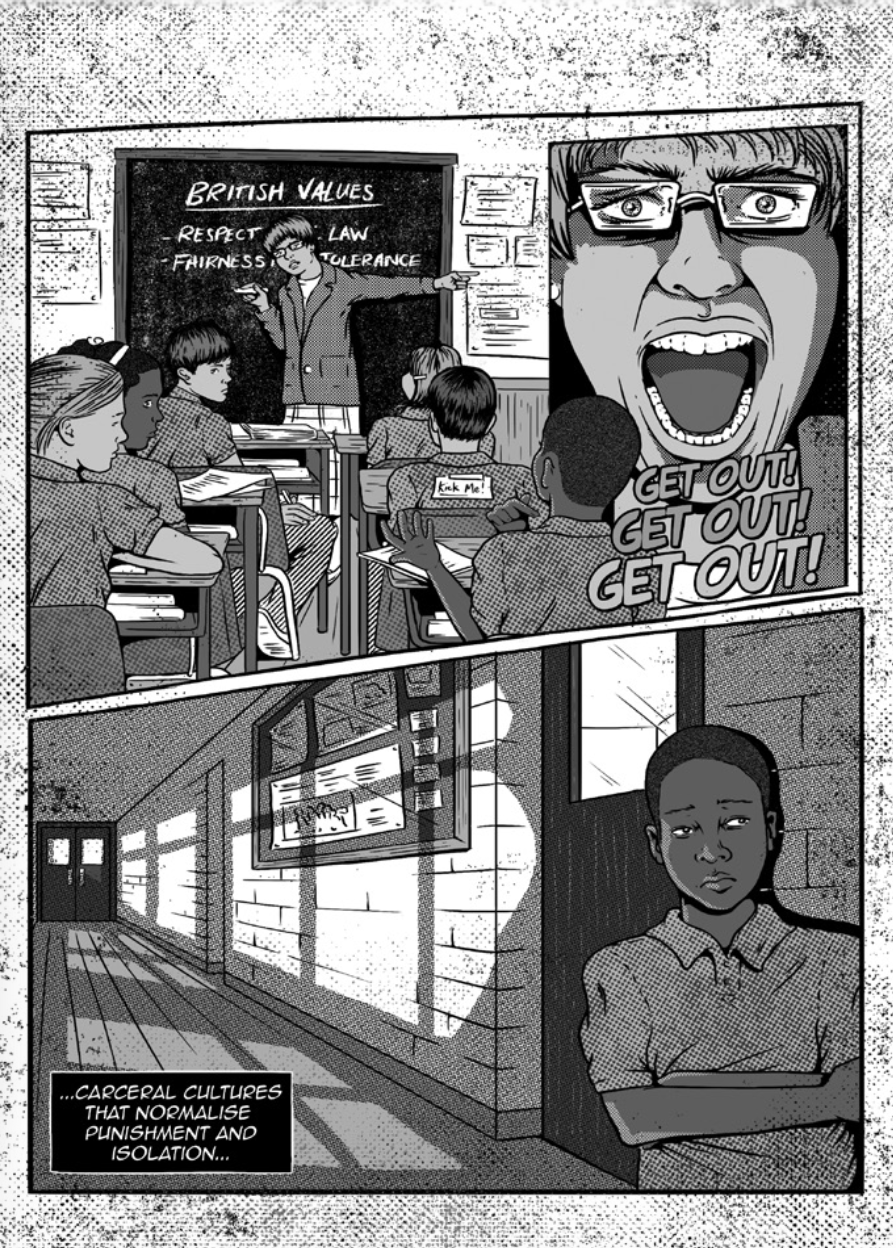
Illustration by Cat Sims
What does it mean to apply abolitionist principles to our everyday lives? How do we embed abolitionist practices into our schools, workplaces, neighbourhoods and relationships?
[This chapter is from Abolishing the Police: An Illustrated Introduction, edited by Koshka Duff, illustrated by Cat Sims, and published by Dog Section Press.]
Abolition can seem like a daunting task. We live in a world that is saturated with the assumption that police and prisons are necessary to address widespread problems of violence and harm. Even amongst those who recognise that police and prisons do not make us safe and instead perpetuate inequality, violence and harm, it can still feel hard to imagine life without these institutions (Davis, 2003).
But as leading abolitionist thinker and organiser Ruth Wilson Gilmore reminds us, abolition is not simply about getting rid of the prisons, police or systems of surveillance and punishment; abolition is about what we build in their place. “Abolition is about abolishing the conditions under which prison became the solution to problems, rather than abolishing the buildings we call prisons" (Gilmore and Murakawa, 2020). Likewise, we cannot simply do away with the police - we need to address the conditions in which people feel that police are the only or best option for responding to harm in their lives. We must build other means for preventing and addressing harm that will actually keep us safe.
Or listen to an audio version of this chapter.
Access the entire book Abolishing the Police: An Illustrated Introduction.